
VSV-G,來源于水泡性口炎病毒的融合性外殼G糖蛋白,常被用于逆轉錄病毒和慢病毒載體的生物醫學研究。VSV-G標簽通常融合于目的蛋白的N-或者C-端,以便使用免疫組化方法來進行觀察和分析。
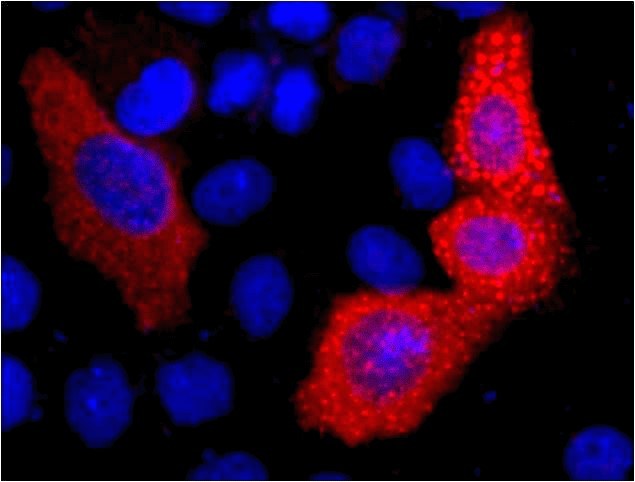
Fig.1.Immunofluorescence staining (1:1,000) of VSV-G fusion protein in 293 cells with red and counterstained with DAPI.
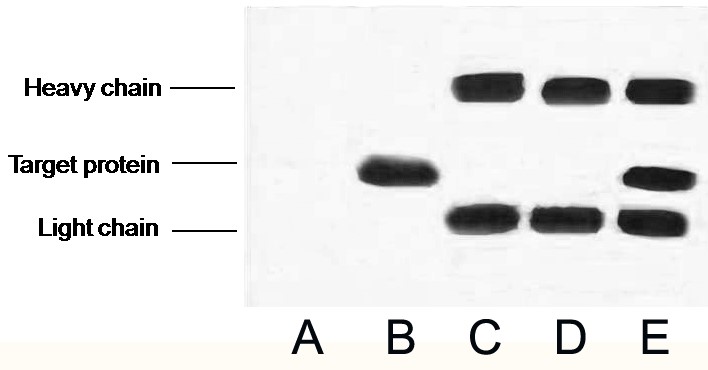
Fig.2.IP (1:200) - WB (1:5,000) analysis of VSV-G Tag fusion protein expression in 293 cells. Untransfected 293 cell lysate (lane A), transfected 293 cell lysate with VSV-G tag protein (lane B); IP untransfected 293 cell lysate with Anti VSV-G tag mAb (lane C); IP transfected 293 cell lysate with normal Mouse IgG (lane D) or with Anti VSV-G tag mAb (lane E).
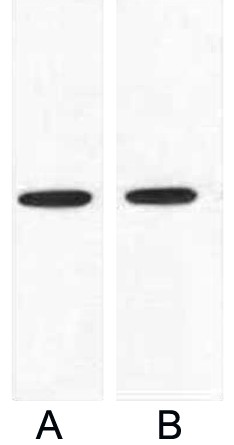
Fig.1.Western blot analysis of 1ug VSV-G fusion protein with Anti-VSV-G mouse monoclonal antibody in 1:5,000 (lane A) and 1:10,000 (lane B) dilutions.
水泡性口炎病毒( VSV)屬于有包膜RNA病毒,以出芽的方式從宿主細胞的質膜上釋放出來。來源于水泡性口炎病毒的融合性外殼G糖蛋白( VSV-G)已被用于逆轉錄病毒和慢病毒載體中作為基因轉移的重要手段。VSV-G標簽經常被用于融合在目的蛋白的N端或C端,并采用免疫組化方法方便觀察。